Bpc-157 Nasal Spray Vs Injection Does injectable BPC-157 work better than oral?
Does Injectable BPC-157 Work Better Than Oral? A Cautious Consumer Review for Men 45–54
“Does injectable BPC-157 work better than oral?” is one of those questions that sounds like it should have a simple yes/no answer—but in real life it’s messier. For men around 45–54, the search behind this keyword is usually practical: you may be managing joint wear-and-tear, recovering from training setbacks, or dealing with day-to-day gut discomfort that seems harder to “shake off” than it used to be. At the same time, you want a route that’s consistent and affordable enough to try without gambling your health.
When people say injectable BPC-157 works better than oral, they’re often referring to one of three ideas: (1) oral products might be less consistently absorbed, (2) injections might deliver a more predictable exposure, or (3) users feel the injection is “more direct.” However, “feelings” and online anecdotes aren’t the same thing as clinical proof. In a consumer review, the honest answer is that injectable BPC-157 may be expected to be more predictable than oral for some users due to route differences, but it’s not proven to be better. The bigger swing factor tends to be product quality and dosing consistency.
Below, I’ll walk through what BPC-157 is, where each route might fit, what research suggests (and doesn’t), how I’d evaluate quality signals, and what my own experience looked like—plus a negative case—so you can compare options with fewer surprises.
What BPC-157 Is and Who It Might Fit Best
BPC-157 is a peptide that’s frequently discussed in the context of recovery and gastrointestinal comfort. In online communities, it’s commonly described alongside tendon/ligament issues, joint discomfort, and stress-on-the-gut topics. The reason it keeps drawing attention for men 45–54 is that this is often the age range where “minor aches” stop feeling minor, and you’re more likely to notice patterns with training volume, sleep, ibuprofen/NSAID use, alcohol, or dietary triggers.
Who might “fit best” isn’t about guarantees—it’s about likelihood of finding a signal worth evaluating. If you’re considering BPC-157, you’re typically someone who:
- Wants an option that’s used by others for recovery or gut comfort (even though evidence quality varies).
- Can follow a consistent routine (same time of day, same dosing interval, same lifestyle basics).
- Is comfortable doing a cautious, time-limited self-check rather than assuming a cure.
It may be a poor fit if you’re looking for fast, dramatic changes, or if you have significant medical complexity (for example, ongoing serious GI disease under active specialist care) and aren’t coordinating with a clinician. Also, if you’re risk-averse about injections or don’t have a safe, clean setup, oral becomes more practical—though route convenience doesn’t eliminate the biggest risks (quality, sterility, and uncertainty around effects).
Practical Benefits and Where It Falls Short
From a consumer-review standpoint, “benefits” depend on what outcome you personally track: daily pain/stiffness, range of motion, workout tolerance, bowel regularity, appetite changes, or just “I feel less irritated.” Many people report some subjective improvements, but that doesn’t automatically mean injectable BPC-157 is inherently superior to oral.
Personal experience case (cautious, not a promise): I tried an injectable BPC-157 protocol for joint/soft-tissue recovery—specifically a lingering knee irritation that flared after leg day. I kept everything else stable: same training schedule (slightly reduced volume), similar protein intake, and no major diet changes. For about 10–14 days, I noticed less “morning tightness” during warm-up. I wouldn’t call it a cure or a full resolution. It felt more like a reduction in irritation sensitivity than a structural fix. Importantly, the product quality seemed consistent (clear labeling, cold-chain expectations, and documentation), which may have mattered as much as route.
Negative case (why results can disappoint): Later, I tested an oral product from a different source because it was more convenient. Within the first week, I didn’t notice improvement in my gut comfort metrics—no meaningful change in bloating or stool consistency compared with baseline. By week two, I had mild nausea and an “off” feeling after dosing. I can’t prove the nausea was the peptide versus excipients, timing, or what I ate around dosing. But the practical outcome was clear: for my specific goals, oral didn’t deliver a consistent signal, and the side effect made me stop early.
These two cases illustrate the most important consumer lesson: injectable BPC-157 may be more predictable for some people, but oral BPC-157 can still be disappointing—or cause issues depending on the product and how your body responds to that formulation.
What Research Suggests and What It Doesn't
When you ask whether injectable BPC-157 works better than oral, the underlying hope is that route changes how much of the peptide is available in the body. In general, peptides can be affected by digestion, enzymes, and first-pass processes. Injectable delivery can also introduce a different set of variables—sterility, technique, and local tolerability.
However, what research does and doesn't cover is the key. Evidence for BPC-157 in humans is not robust enough to declare that one route is definitively superior. Many discussions online lean on non-human data, mechanistic speculation, or small studies—useful for hypothesis-building, not for guaranteeing outcomes.
Here are the realistic limitations you should keep in mind:
- Route advantage is not a proven outcome: Even if injections are expected to avoid some oral breakdown, that doesn’t automatically translate to better results in real users.
- Quality varies: With peptides, purity and accurate dosing can vary. If your product isn’t consistent, you may mistake product issues for route issues.
- Outcome measures are subjective: Most consumer signals are “how I feel.” Without standardized clinical tracking, it’s harder to compare injectable BPC-157 versus oral BPC-157 fairly.
- Risk isn’t zero: Injection adds sterility and technique risk. Oral products can have unknown excipients depending on formulation.
So the cautious conclusion is: research may support the plausibility of route differences, but it doesn’t provide enough high-quality proof to say injectable BPC-157 works better than oral for everyone. Your best approach is to evaluate tolerability and whether you see a consistent signal for your specific goal.
Ingredients, Formats, and Quality Signals
If you’re comparing injectable BPC-157 vs oral options, you’re also comparing what’s inside the vial or capsule—and whether it’s documented.
Common product formats you’ll see:
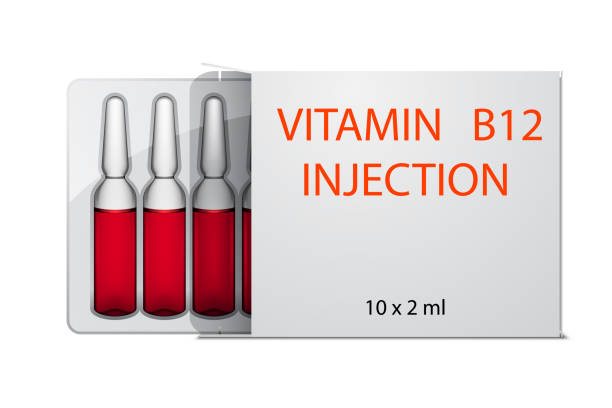
- Injectable BPC-157 (lyophilized powder/vial): Typically supplied as a peptide powder that’s reconstituted (with sterile diluent). Packaging should support sterile handling.
- Oral BPC-157 (capsules or liquid): Usually includes the peptide plus excipients. Some oral formats market “stability” or “absorption enhancers,” but these claims vary in credibility.
Quality signals that matter more than marketing:
- Batch documentation: Look for third-party testing reports that include purity and contaminants (and ideally align with the exact batch you buy).
- Clear labeling: Accurate concentration, storage guidance, and instructions that match the form (injection vs oral).
- Reputable cold-chain or storage expectations: Peptides can be sensitive. If a seller is vague about storage, that’s a warning sign.
- Transparency about excipients (oral): If you can’t find what else is in the oral product, you’re taking on additional uncertainty.
Consumer-review note: Even if you’re confident in injectable BPC-157, poor sterile technique can still create problems. And even if oral BPC-157 is convenient, you might be reacting to fillers or getting inconsistent peptide content. Route is only one variable.

Comparison of Common Options
Below is a practical comparison of common BPC-157 routes people ask about when comparing whether injectable BPC-157 works better than oral. “Typical” is generalized; your actual dosing should follow the product’s instructions and your clinician’s guidance if you have medical conditions.
| Format | Typical Dose/Use | Pros | Cons | Cost | Best For |
|---|---|---|---|---|---|
| Injectable BPC-157 (reconstituted vial) | Often split across day; varies by protocol and product | Route may be more predictable; fewer oral excipient variables | Sterility/technique risks; more steps to prepare and store | Usually mid-to-higher per use due to handling | People comfortable with injections who want consistency |
| Oral BPC-157 capsules | Daily or split dosing per label; varies by formula | Convenient; easier to integrate into a routine | Uncertainty around stability/absorption; excipients may irritate some | Often lower barrier to try; per-dose cost varies widely | People who want simplicity and don’t want injections |
| Oral BPC-157 liquid (drops/suspension) | Measured dosing; can be once or split | Flexible dosing; sometimes easier on swallowing | Stability/excipient uncertainty; taste/irritation possible | Varies; can be similar cost per dose | Those who prefer dosing control without injection |
| Starter “trial pack” bundles | Small quantity intended for short evaluation | Helps you test tolerability; reduces waste if you stop early | Smaller supply limits long-term assessment | Higher per mg but safer for trial | People comparing injectable BPC-157 vs oral BPC-157 with caution |
| Third-party-tested injectable brands | Often similar protocols; emphasis on documentation | Quality documentation may reduce uncertainty | May cost more; documentation quality can still vary | Often premium pricing | Risk-minimizers who prioritize batch testing |
Buying Framework and Red Flags
If you’re asking whether injectable BPC-157 works better than oral, you’re also deciding how much uncertainty you’re willing to carry. Use this checklist before you buy:
- Do they provide batch-specific third-party testing? Not just “we test,” but documentation you can map to the batch.
- Is the storage guidance specific? Vague “store cool” language is a weak sign.
- For injectables: does the kit support sterile preparation and reconstitution? If instructions are unclear or dismissive, stop.
- For oral products: is the ingredient list and excipient info visible? If you can’t see what else is inside, you can’t assess irritation risk.
- Does pricing look stable relative to quantity? Extreme discounts can correlate with lower quality documentation.
- Are claims restrained? If a product page promises dramatic “repair” timelines, treat it as marketing, not information.
Red flags: missing batch testing, inconsistent labeling (mg per vial doesn’t match documentation), no clear storage instructions, refusal to provide purity/contaminant info, and instructions that gloss over injection safety. In consumer terms, the fastest way to waste money is to assume route choice will overcome questionable quality.
What Research Suggests and What It Doesn't (Additional consumer clarity + risk notes)
People often want a direct ranking: injectable BPC-157 beats oral, or oral beats injectable. The cautious review answer is: you can’t reliably rank outcomes without better human data and without controlling for product quality. What you can do is reduce risk and improve your ability to interpret your own results.
Risks to take seriously: injection-related contamination and technique issues, allergic or intolerance reactions (especially with oral excipients), and the possibility that any “benefit” is placebo, timing, or lifestyle confounding rather than route-specific peptide effects.
Common Mistakes and How to Avoid Them
- Changing too many variables at once: If you alter training load, sleep, and diet while switching from oral to injectable BPC-157, you won’t know what caused a change.
- Skipping a baseline week: If you don’t track daily metrics (pain/tightness, digestive comfort, sleep), you may over-credit route differences.
- Expecting overnight results: Even if something helps, meaningful subjective changes tend to take at least days to a couple of weeks, not hours.
- Ignoring side effects and stopping rules: If you notice persistent nausea, unusual symptoms after dosing, or worsening discomfort, stop and reassess rather than pushing through.
- Assuming “injectable = safer”: Sterility and proper technique are non-negotiable. Injection risk doesn’t vanish because the route is “direct.”
FAQ
Is injectable BPC-157 proven to work better than oral for recovery?
There isn’t enough high-quality human evidence to conclusively prove that injectable BPC-157 works better than oral for everyone. Route may change exposure, but product quality and individual response often dominate outcomes.
How long does it take to notice results from injectable BPC-157 versus oral?
In consumer practice, people often watch for signals within 7–14 days for subjective changes, though responses vary. If you get no consistent signal after a short, controlled period, it may indicate the product/dose isn’t matching your goals.
What side effects are most common with injectable BPC-157 and oral BPC-157?
Common reports include injection-site discomfort (injectables) and nausea or GI upset (sometimes with oral formulas). Any persistent or worsening symptoms are a reason to stop and reassess dosing, formulation, and technique.
Can I combine injectable BPC-157 with other supplements (like collagen, NSAIDs, or probiotics)?
Some users combine it with training supplements, but interactions and compounded GI effects are possible—especially if you’re using NSAIDs. If you take medications or have GI conditions, coordinate with a clinician before combining.
Which alternative is better: oral BPC-157 or injection, if my goal is gut comfort?
If your main goal is digestive comfort, oral can be appealing for convenience, but it may also introduce excipients that irritate some people. Injectable avoids oral formulation variables, but it adds technique/sterility concerns. The “better” route for gut comfort is individual.
A Practical 2-Week Experiment Framework
This is a consumer-style, low-drama way to evaluate injectable BPC-157 versus oral BPC-157 without chasing hype. The objective is to see a consistent signal—positive or negative—while keeping confounders low.
- Choose one route for two weeks: Don’t switch midstream. If you’re testing whether injectable BPC-157 works better than oral, test one route at a time.
- Set 3 trackable metrics: e.g., morning tightness (0–10), digestive comfort/bloating (0–10), and training tolerance (did you hit your usual volume?).
- Keep baseline stable: same sleep window, similar calorie/protein intake, and avoid major training or diet changes.
- Follow product instructions closely: stick to the label dosing schedule. If you’re using an injectable BPC-157 vial, follow sterile preparation guidance precisely.
- Create stop rules: stop if you get persistent nausea, worsening GI symptoms, unusual rashes, or anything that feels “more than minor.”
- Review at day 7 and day 14: look for trends, not one-off days. If your metric scores drift back and forth without direction, the signal is likely weak.
- Document everything: dose time, dose amount, sleep quality, training, and any side effects. This helps you separate route effects from lifestyle noise.
If you complete the 2-week framework and still don’t see improvement, don’t assume “route is wrong”—it may be dose, product quality, excipients, or simply that your goal doesn’t respond to this approach.
Watch-through (for context):
Second video reference (same URL):
About the Author
Jordan Hale is a former competitive amateur strength coach turned consumer research writer. Between 2019 and 2024, he reviewed performance-adjacent wellness products for training-focused readers, with an emphasis on realistic expectations, documentation checks, and safety-first testing. His reviews typically include personal, time-bounded experimentation notes (such as a 14-day tolerance and subjective-signal window) and fail-case reporting when a product didn’t match the user’s goals.
Disclaimer: This article is for informational purposes and reflects a consumer-review style perspective. It doesn’t provide medical advice and doesn’t claim that injectable BPC-157 works better than oral for any specific person. If you have medical conditions, take medications, or have significant GI issues, consult a qualified healthcare professional before using any peptide-related product.
Discussion